
What is a landing page?
Here’s a simple landing page definition: it’s a standalone web page designed around one goal, such as getting a visitor to request a quote, book a call or buy a product. Visitors usually reach it by clicking a link in an advert, an email or a social media post.
Strictly speaking, any page someone arrives on first is where they “landed”, which is why the term gets used loosely. In digital marketing, what is meant by a landing page is more specific: a focused page with one message, one offer and one clear call to action.
How does a landing page work?
A landing page works by narrowing a visitor’s journey down to one step. Most follow the same simple sequence:
- Someone clicks your advert, email or social post.
- They arrive on a page that repeats the promise they clicked on.
- The page explains the offer, the benefits and why they can trust you.
- They take the action, such as filling in a form or booking a call.
- You track the result, so you know exactly which campaign brought the enquiry in.
What are landing pages on a website?
Landing pages on a website sit alongside your main pages but behave differently. They’re often kept out of the main menu, so the people who see them are the ones you send there. A web landing page might promote a seasonal offer, a single service, a free guide or an event.
Lead generation pages
Which collect contact details through a short form
Click-through pages
Which warm visitors up before sending them on to a booking or checkout page
Sales pages
Which sell one product or service from start to finish
Event pages
Which take registrations for a webinar, open day or launch

What is the purpose of a landing page?
So what is a landing page used for? Its main purpose is to convert. Every element works towards one action, so visitors stay focused on the offer you’ve brought them there for.
More enquiries from the same budget
Because visitors have one clear next step
Clearer measurement
Because one page with one goal shows exactly what each campaign delivers
Stronger ad performance
Because a page that matches the advert keeps visitors engaged and supports your Google Ads results
Landing page vs homepage vs website
Your homepage introduces your business, your website tells your full story, and a landing page asks visitors to take one specific step. Each has a different job, and they work best together.
| Landing page | Homepage | Other Website Pages | |
|---|---|---|---|
| Main job | Convert visitors from one campaign | Introduce the business and guide visitors onwards | Hold everything about your business |
| Who visits | Targeted traffic from ads, emails or social posts | Everyone, from first-time visitors to loyal customers | Everyone, through many entry points |
| Navigation | Minimal or none | Full menu | Full menu across every page |
| Calls to action | One | Several | Many, page by page |
| Lifespan | Often as long as the campaign runs | Long term, refreshed over time | Long term |
Landing page vs homepage. A homepage has to speak to everyone at once, so it offers lots of routes: services, case studies, news and contact details. That’s exactly right for a homepage, but it’s why sending paid ad traffic there tends to waste budget. Someone who clicked an advert for one service wants to land on a page about that service, with an easy way to get in touch.
Landing page vs website. This isn’t an either/or choice. A website builds trust and visibility over time, while landing pages turn specific campaigns into results. The strongest approach is landing pages that sit on your own website, sharing its branding, domain and credibility.

What is a landing page in Google Ads?
In Google Ads, the landing page is the page someone reaches after clicking your advert, set as the ad’s final URL. Google assesses landing page experience as one of the factors in your Quality Score, alongside expected click-through rate and ad relevance.
A higher Quality Score helps your ads appear more often and can lower what you pay for each click. To get there, your landing page should:
- Repeat the promise made in the advert, ideally in the headline
- Focus on the exact service or product the ad group targets
- Load quickly and work well on mobile
- Make the next step obvious and easy
What is an SEO landing page?
An SEO landing page is a page on your website built to rank in Google’s organic results for a specific search term, such as a service, a sector or a location. When people ask what a landing page is in SEO, this is what they mean: a page designed to be found through search rather than through an advert.
Paid landing pages borrow their visitors from a campaign. SEO landing pages earn theirs, and keep bringing in enquiries long after they’re published, without you paying for every click.
| SEO landing page | Paid landing page | |
|---|---|---|
| Where visitors come from | Organic Google results | Ads, emails and social posts |
| Navigation | Part of your main menu | Usually kept out of the menu |
| Content | In-depth, answering the questions people search for | Short and focused on one offer |
| Lifespan | Long term, growing stronger over time | Usually as long as the campaign runs |
| Cost per visitor | Free once it ranks | Paid for every click |
Types of SEO landing page
Most businesses benefit from a mix of these four types, each built around a different kind of search.
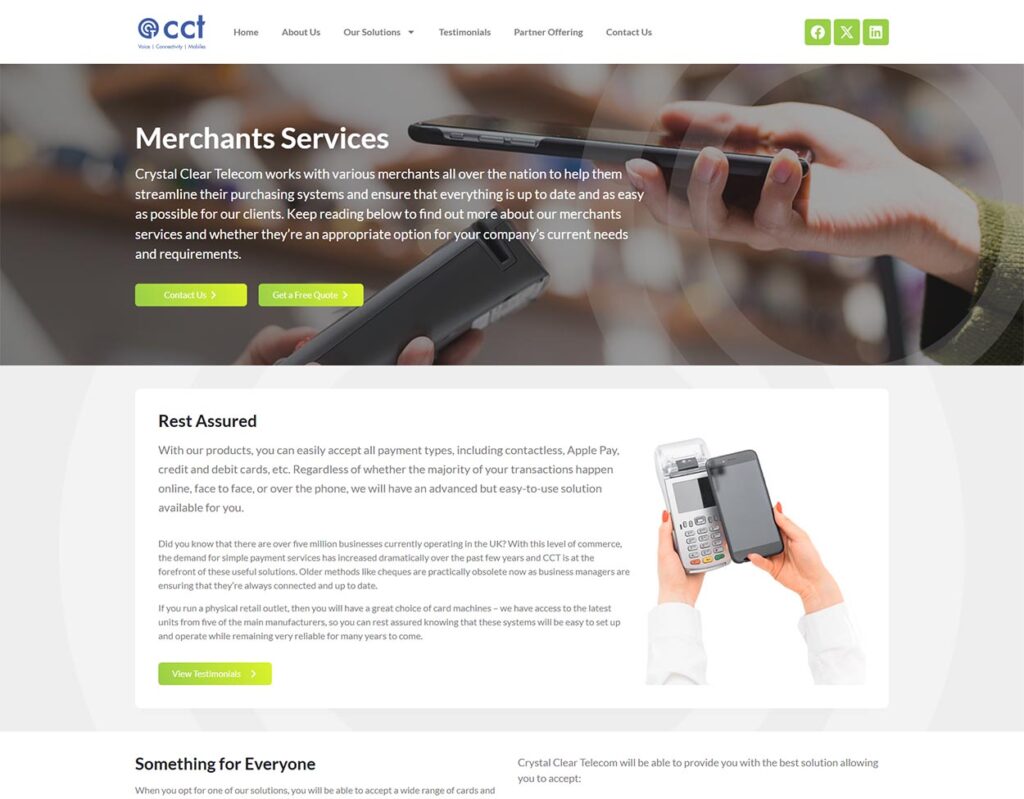
Service pages
A service page targets the services your customers search for by name. It explains what you offer, who it’s for, how it works and why someone should choose you, then makes it easy to get in touch. Each main service deserves its own page, rather than one page listing everything you do.
Examples:
- An accountancy firm with separate pages for “bookkeeping services”, “VAT returns” and “payroll services”
- A heating engineer targeting “boiler servicing”, “boiler installation” and “central heating repairs”
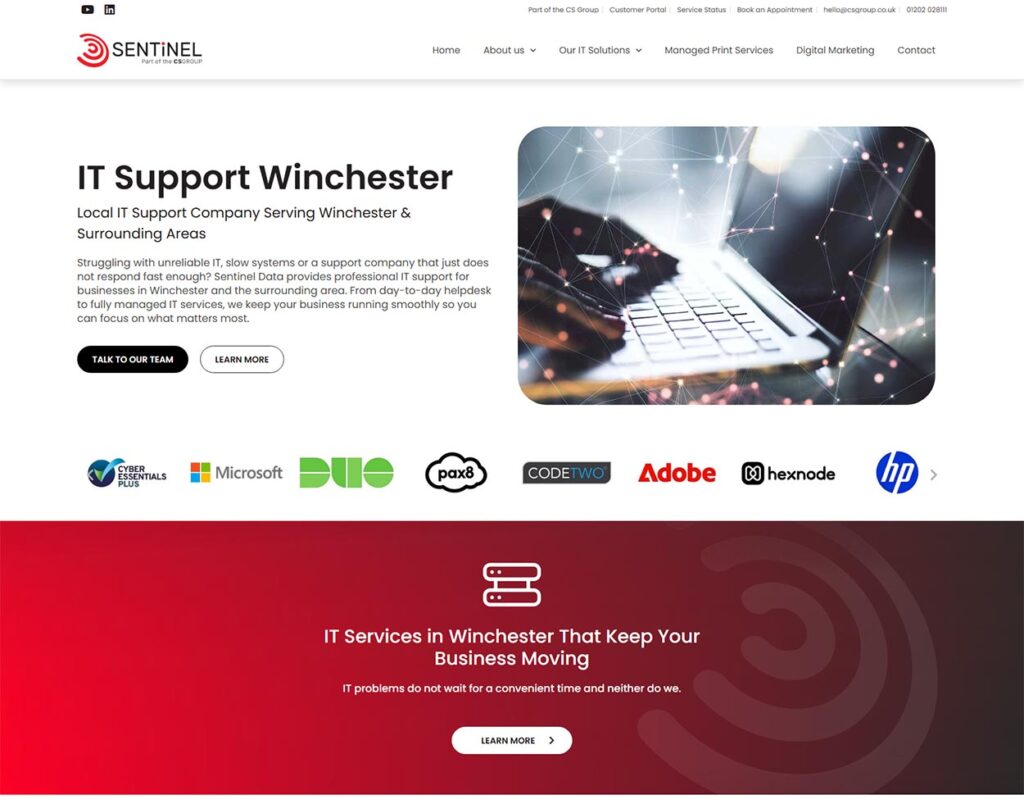
Location pages
Location pages target people searching for a service in a particular town or county. They work best when each page is genuinely written for that place, mentioning nearby areas you cover, local projects and the details that matter to customers there, rather than repeating the same text with a different town name.
Examples:
- A roofer with pages for “roofer in Southampton” and “roofer in Winchester”
- A solicitor targeting “family solicitor Bournemouth” and “family solicitor Poole”
Sector pages
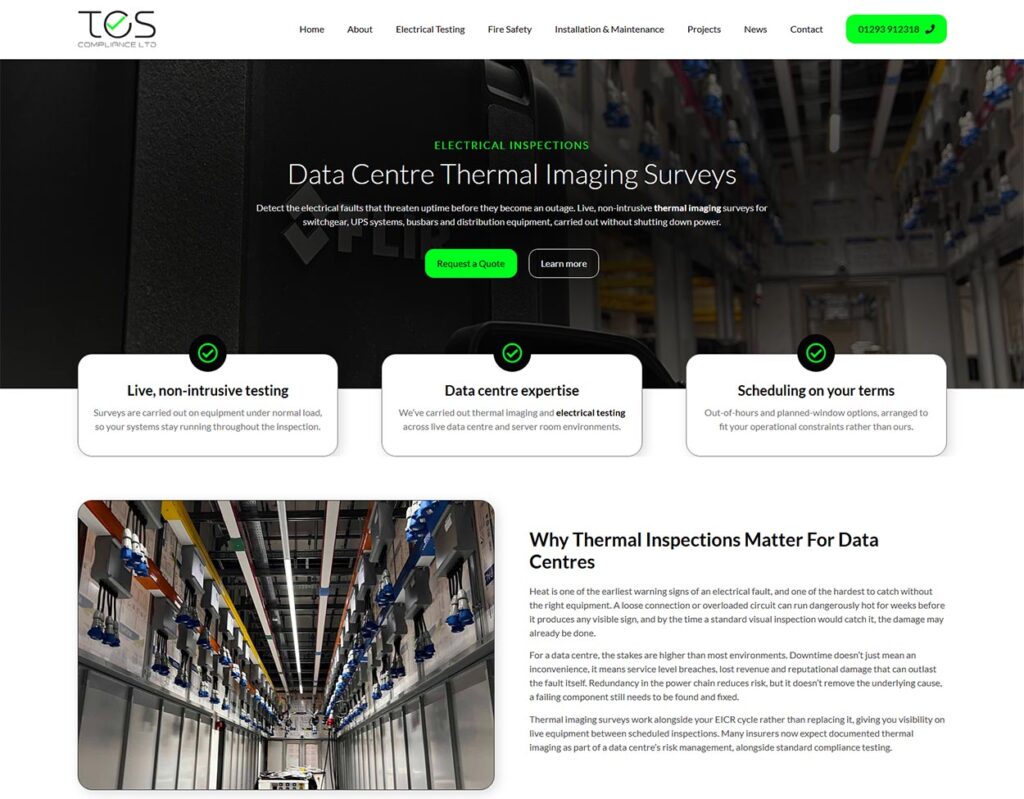
Sector pages speak directly to one industry, showing you understand its challenges, regulations and customers. They’re ideal if you offer the same service to very different audiences, because each sector can see its own needs reflected back.
Examples:
- A marketing agency with pages for “marketing for law firms” and “marketing for dental practices”
- A commercial cleaning company targeting “school cleaning services” and “care home cleaning”
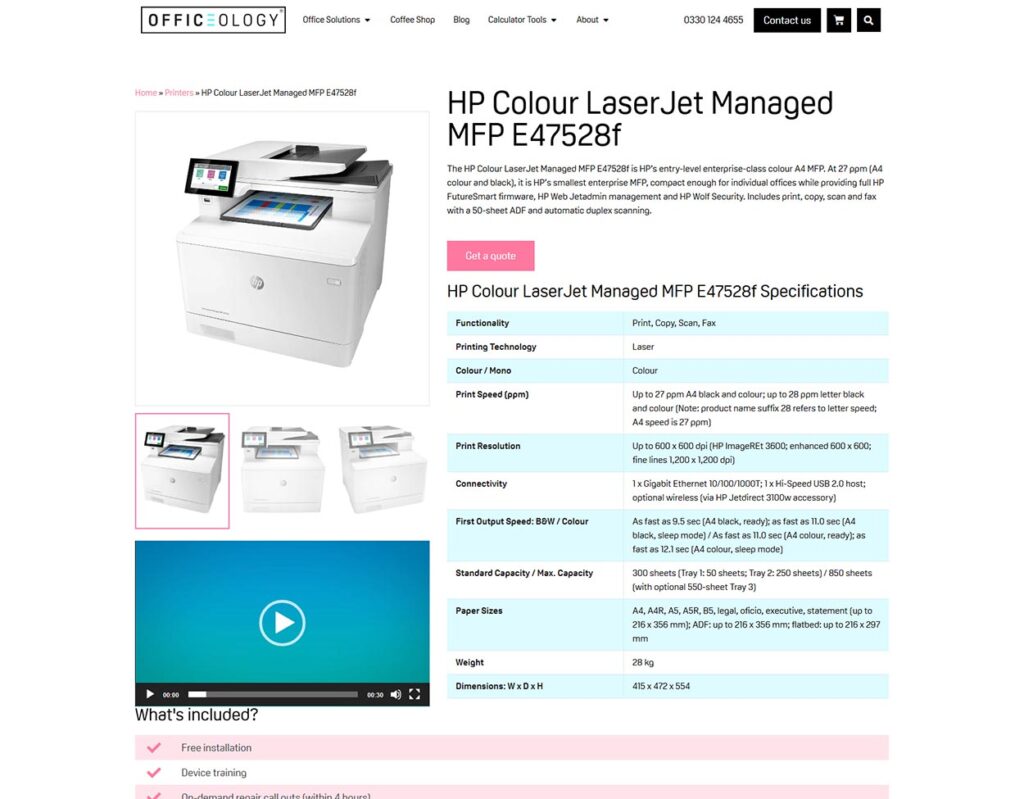
Product and category pages
For businesses that sell online, product and category pages are often the most valuable SEO landing pages. Category pages target broader searches, while product pages capture people who already know exactly what they want.
Examples:
- A garden centre with a category page for “outdoor plant pots” and product pages for individual planters
- A furniture shop targeting “oak dining tables” as a category, with each table range as its own product page

What makes a strong SEO landing page?
- One main keyword per page, used in the page title, H1, URL and opening paragraph
- Content that fully answers the search, so your page is the most useful result Google can show
- Clear headings that make the page easy for readers and search engines to scan
- Internal links from related pages and blog posts, showing Google the page matters
- A fast, mobile friendly build, which supports both rankings and enquiries
- A clear call to action, because ranking only pays off when visitors get in touch
- FAQs with schema markup, which can help the page appear for related questions
Getting these right is where specialist help pays off. Our SEO specialists plan every SEO landing page around real search data and quality content, so each one targets the terms your customers actually use and turns that visibility into enquiries.
What should a landing page include?
What makes a good landing page is clarity: a visitor should understand the offer and know what to do next within a few seconds. A great landing page goes further, giving them every reason to act now. Many of the principles behind a good website apply here too, just focused on a single goal. These are the elements we build into every high-converting landing page.
What does a landing page look like?
Layouts vary with the offer, but most landing pages follow a similar shape from top to bottom:
- A hero section with the headline, a short supporting line, a call to action button and a strong image
- A few key benefits, often with simple icons
- Proof, such as reviews, accreditations or client logos
- A short enquiry or booking form
- Answers to common questions that might stop someone getting in touch
- A minimal footer with contact details, and usually no full menu
The page reads as one continuous journey towards a single action. Here’s what each part needs to do.
A headline that matches the ad
Your headline should echo the advert, email or post that brought the visitor in. If your ad says “Same-day boiler repairs in Southampton”, the page should say the same. That instant match reassures people they’re in the right place.
One clear call to action
Decide on the single action you want, such as “Book a free consultation” or “Get your quote”, and make it impossible to miss. Repeat the same button further down the page so it’s always within reach. Good call to action button design also comes down to clear wording, a contrasting colour and smart placement.
Proof and reassurance
Reviews, star ratings, accreditations, client logos and short results all build trust quickly. For local businesses, a line about where you’re based and the areas you cover helps too.
A short, simple form
Ask only for what you need to follow up, usually a name, email address or phone number and a short message. Every extra field gives people another reason to leave.
Fast loading and mobile friendly design
Most visitors arriving from ads and social media are on their phones. Compressed images, clean code and a layout designed for small screens keep them on the page and support your Google Ads Quality Score.
What is a holding page?
A holding page is a temporary single page that sits on your domain while your new website is being built or updated. Like a landing page, it has one clear job: keeping visitors informed until your full site is ready.
A good holding page does more than say “coming soon”. It confirms who you are, shares your contact details and can start collecting email sign-ups ahead of launch, so your new website goes live to an audience that’s already waiting.
Do you need a landing page or a full website?
For most businesses, the answer is both. Your website is where people check you out, compare your services and decide whether to trust you. Landing pages are how you turn specific campaigns into enquiries.
A landing page on its own can work for a short-term project, such as a one-off event or testing demand for a new idea. For a business that wants to grow, though, a strong website gives every landing page more credibility and every campaign a better chance of success.
You’ll benefit from dedicated landing pages if you:
- Run Google Ads, social media ads or email campaigns
- Offer several services aimed at different customers
- Want clearer figures on which campaigns bring in work
- Are launching a new product, service or location
At Loose Connections, our award-winning team in Ringwood designs and builds custom websites and landing pages that work together, so your campaigns and your brand pull in the same direction. Take a look at our recent work or find out more about our web design services.
Landing page questions
What is a landing page URL?
A landing page URL is the web address of the page, such as yourwebsite.co.uk/free-consultation/. Keep it short, descriptive and relevant to the offer. For campaigns, tracking tags can be added to the end so you can see exactly where each visitor came from.
What is a WordPress landing page?
A WordPress landing page is one built within your WordPress website rather than on a separate platform. It shares your domain, branding, hosting and analytics, which keeps everything in one place and lets the page benefit from your site’s existing reputation.
What is a landing page in digital marketing?
In digital marketing, a landing page is the destination for a campaign, whether that’s a Google Ad, a social media post, an email or a QR code on printed material. Its job is to turn the attention the campaign creates into a measurable action.
How many landing pages does a business need?
Ideally, one for each main offer, service or audience you promote. Start with your most valuable services and your active ad campaigns, then add more as you test what works.
